
Nervous about your first therapy session? You don't need the perfect words. A few notes on your phone is plenty.
Sample work — illustrative example, not a real client.
Counseling practice / SAMPLE WEEK
Example: Brindlewood Counseling
Plain talk about starting therapy.
The source recording
Our counselors talk through what a first therapy session is usually like: what to bring, questions to ask about fit, the practical details like fees and scheduling, going at your own pace, and how to check in with yourself afterward.
You don't need the perfect words to start. You just need to start.
ILLUSTRATIVE QUOTE CARD / Brindlewood Counseling
01 / NEWSLETTER
Thinking about starting therapy? Here's what the first session is like.
Subject: Thinking about starting therapy? Here's what the first session is like.
Booking a first appointment can feel like a big step, and it's normal to wonder what actually happens in the room. In this week's episode we talked through the first session in plain language.
Bring a few notes. You don't need a speech. A short list of what's been on your mind, or what made you reach out now, is plenty.
Ask about fit. It's okay to ask how a therapist works, what a typical session looks like and how you'll both know it's helping. A good fit matters.
Cover the practical side. Ask about fees, insurance, scheduling and the cancellation policy up front, so there are no surprises later.
Go at your own pace. You decide what to share and when. Saying "I'm not ready to talk about that yet" is always okay.
Check in afterward. Notice how you felt after the session. It often takes a few meetings to settle in.
Try this week: write down one question you'd like to ask a therapist before you start.
This newsletter is general education, not therapy or medical advice. If you are in crisis or thinking about harming yourself, call or text 988 (in the U.S.) or call 911.
02 / BLOG EXCERPT
Your first therapy session: what to expect
A first session is mostly about getting to know each other. Your therapist will likely ask what brought you in, a little about your background and what you hope to get out of working together.
It helps to bring a few notes and a couple of questions of your own. Asking how your therapist works, what sessions usually look like and how progress is measured can tell you a lot about fit. It's also a good time to sort out fees, insurance and scheduling.
Most of all, the pace is yours. You don't have to share everything at once, and it's normal for the first few sessions to feel a little new. Afterward, take a moment to notice how you felt. That's useful information for you and your therapist.
03 / SOCIAL POSTS
Four ways to keep the conversation going.
04 / GRAPHICS (TEXT + GRAPHICS PLAN)
The same week, as branded graphics.
On the Text + Graphics plan, the same episode also becomes 3-5 graphics a week in your colors: quote cards, a carousel and a blog header.


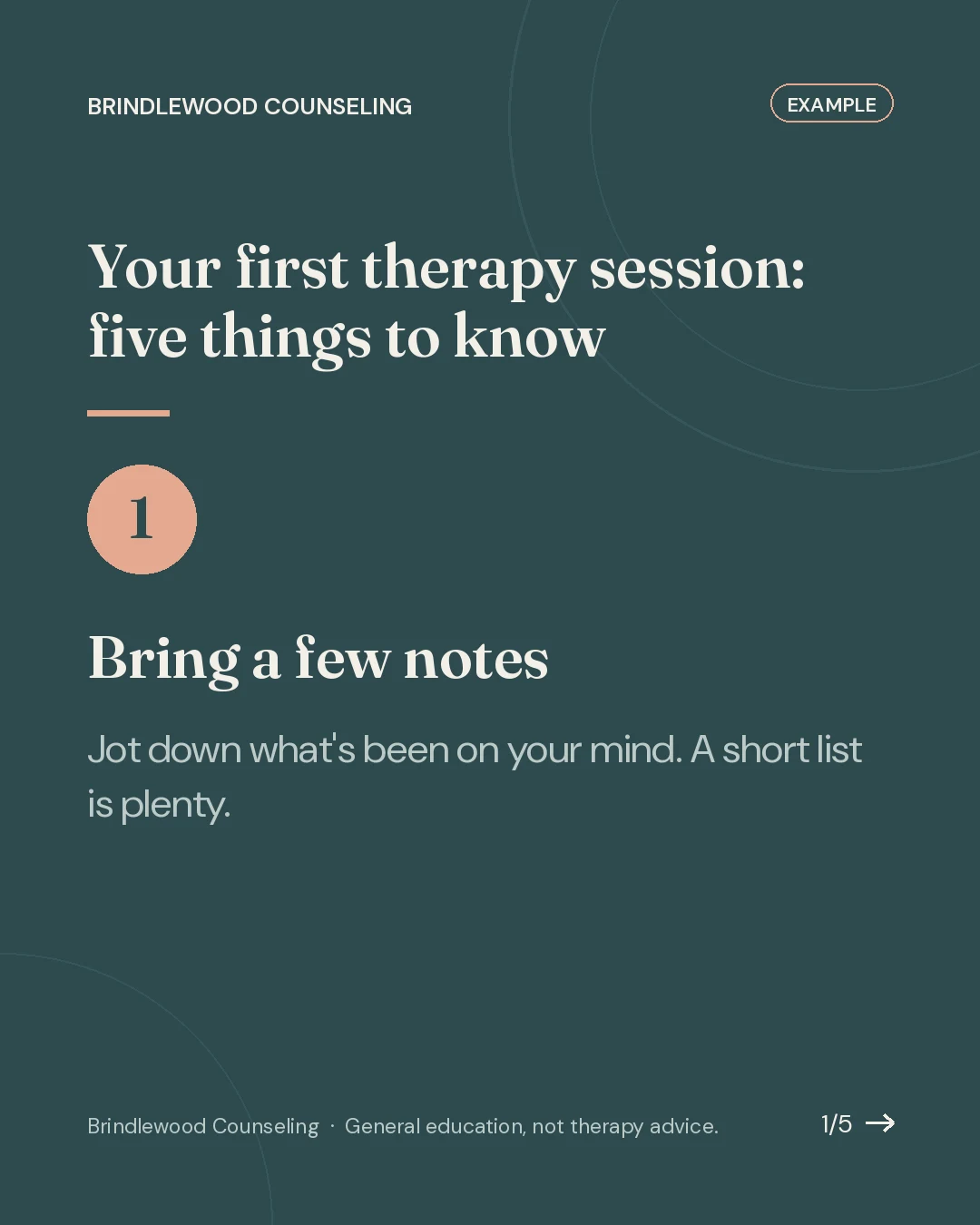
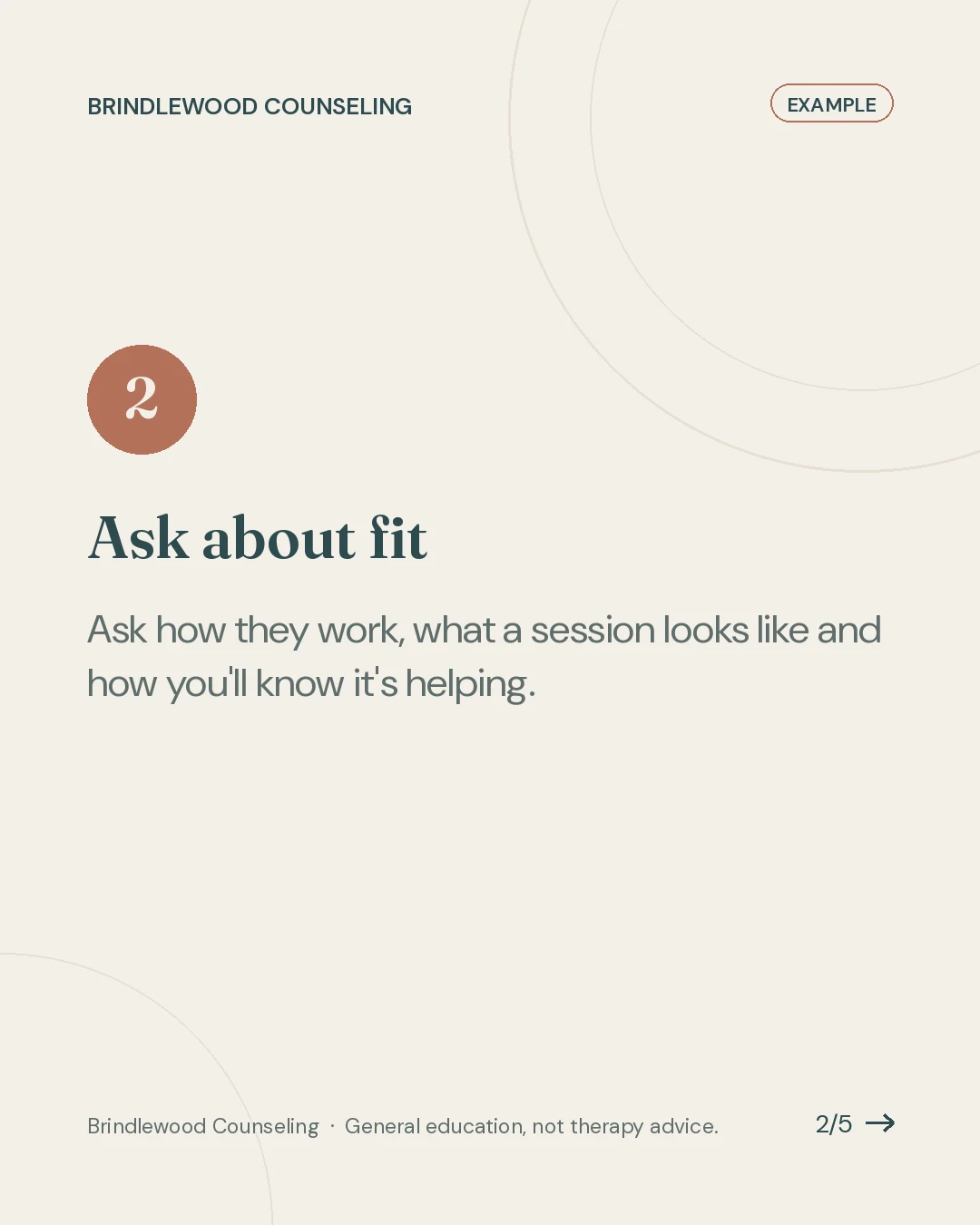
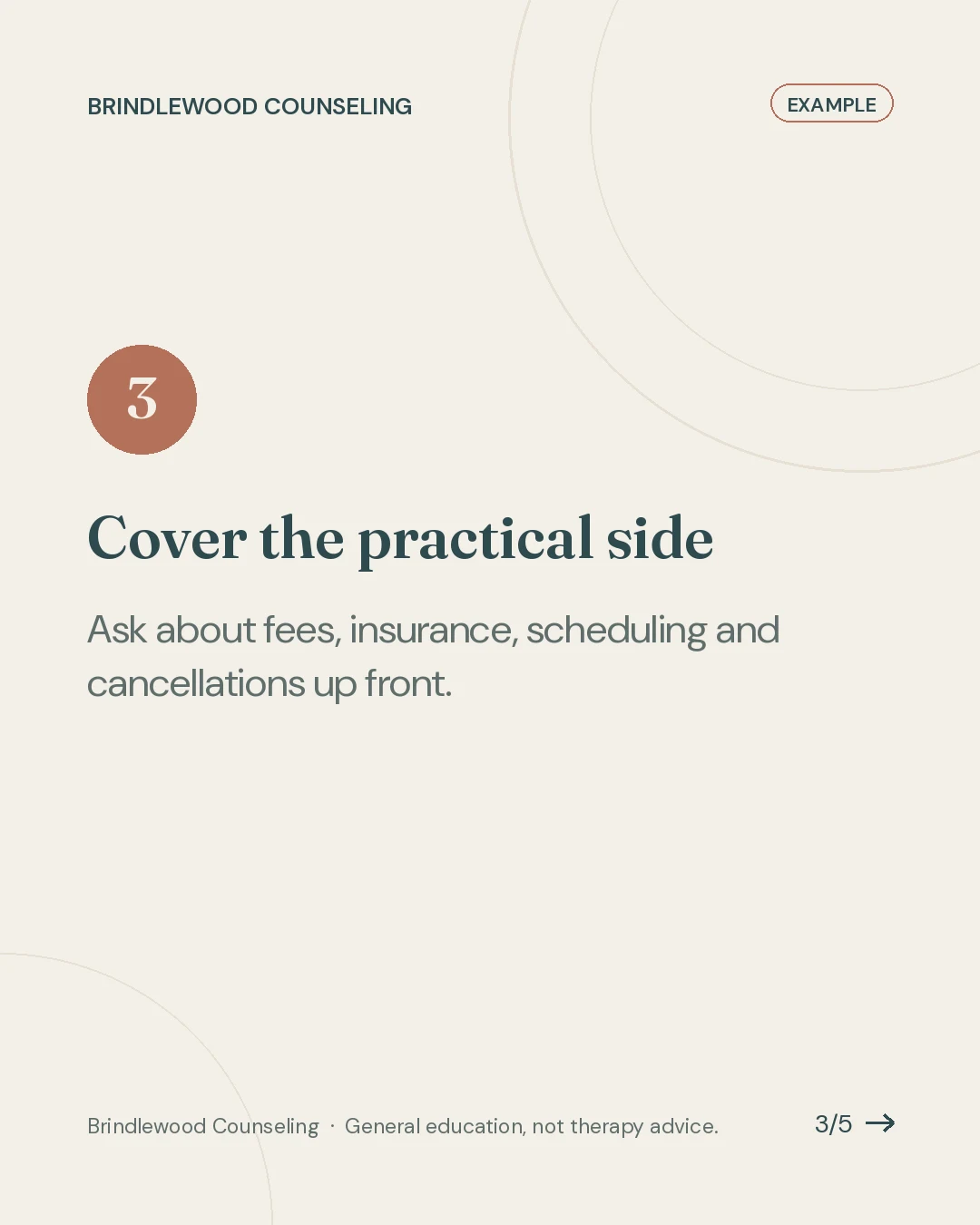
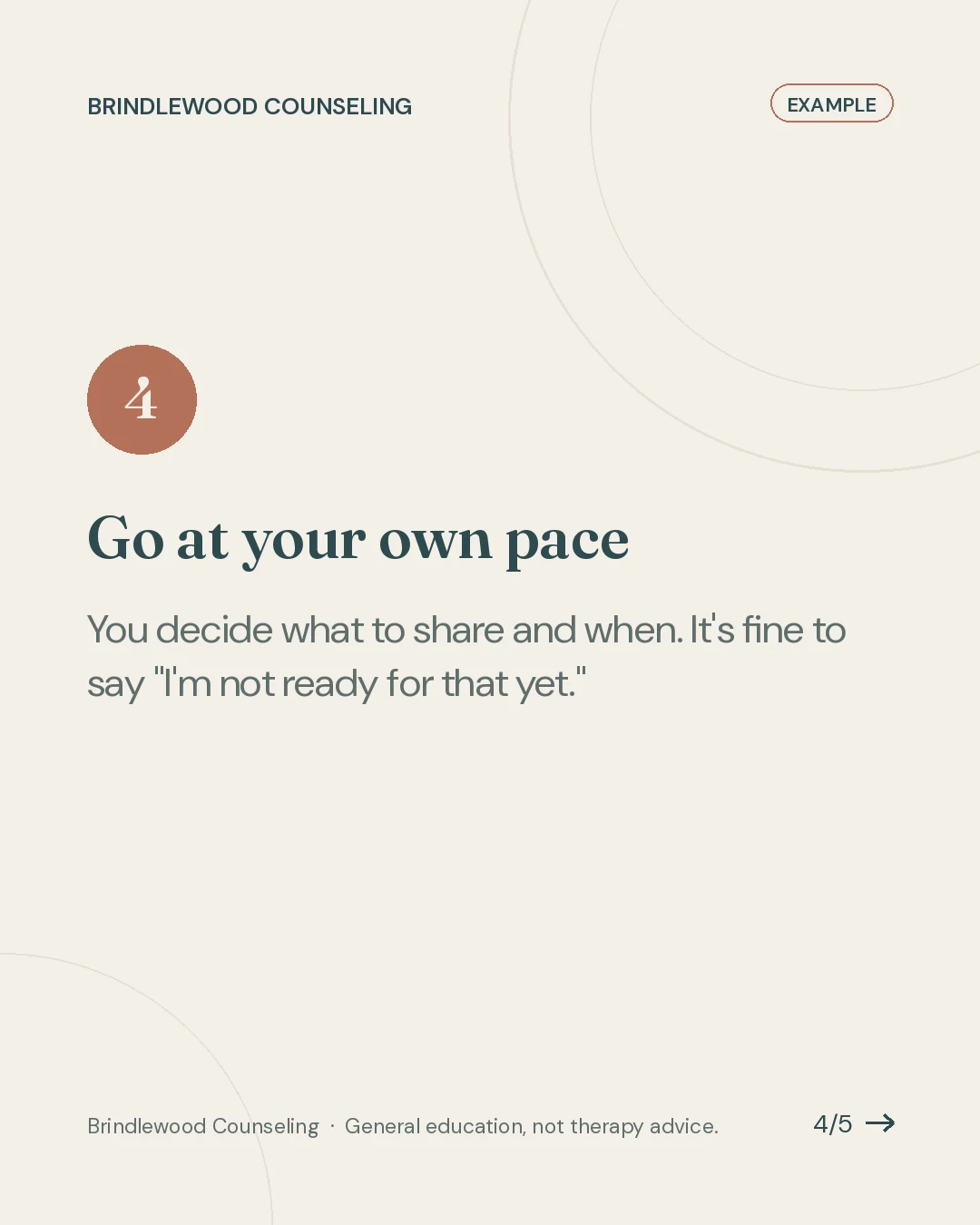
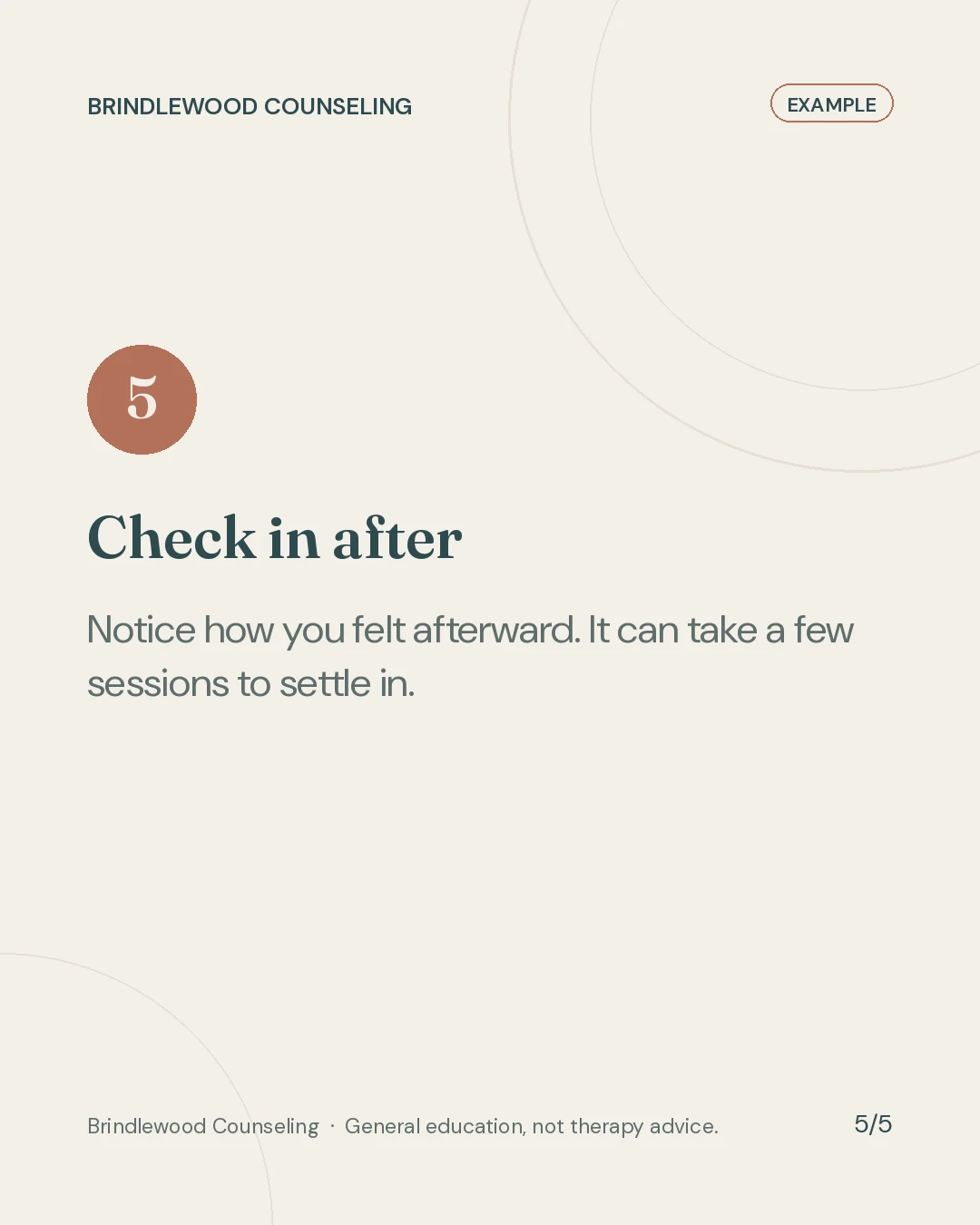
Illustrative graphics for a fictional firm, built from the sample week above.
Illustrative sample for a fictional counseling practice. General education only, not therapy, medical or clinical advice, and not advertising for any real practice. No outcomes are promised. In a crisis in the U.S., call or text 988.