
Feel fine after a fender bender? Get checked out anyway. Some injuries take a day or two to show up.
Sample work — illustrative example, not a real client.
Personal injury attorney / SAMPLE WEEK
Example: Corbel Bay Injury Law
Clear answers for the days after an accident.
The source recording
Our personal injury attorney talks through the first week after a car accident: why getting checked out matters even when you feel fine, what to keep in a simple file, how to handle calls from an insurance adjuster, and why claim deadlines are worth knowing early.
The days right after a crash shape what you can show later.
ILLUSTRATIVE QUOTE CARD / Corbel Bay Injury Law
01 / NEWSLETTER
The first week after a car accident: a simple checklist
Subject: The first week after a car accident: a simple checklist
Most people have never been in a serious accident before, so the week after one is full of questions and phone calls. In this week's episode we walked through what tends to matter most in those first days, in plain language.
Get checked out, even if you feel okay. Some injuries take a day or two to show up, and a visit to a doctor also creates a record of when you were seen and what you reported.
Start a simple file. Keep photos of the vehicles and the scene, the other driver's name and insurance details, the police report number if there is one, your claim number, and every medical bill and receipt. A folder or a note on your phone is enough.
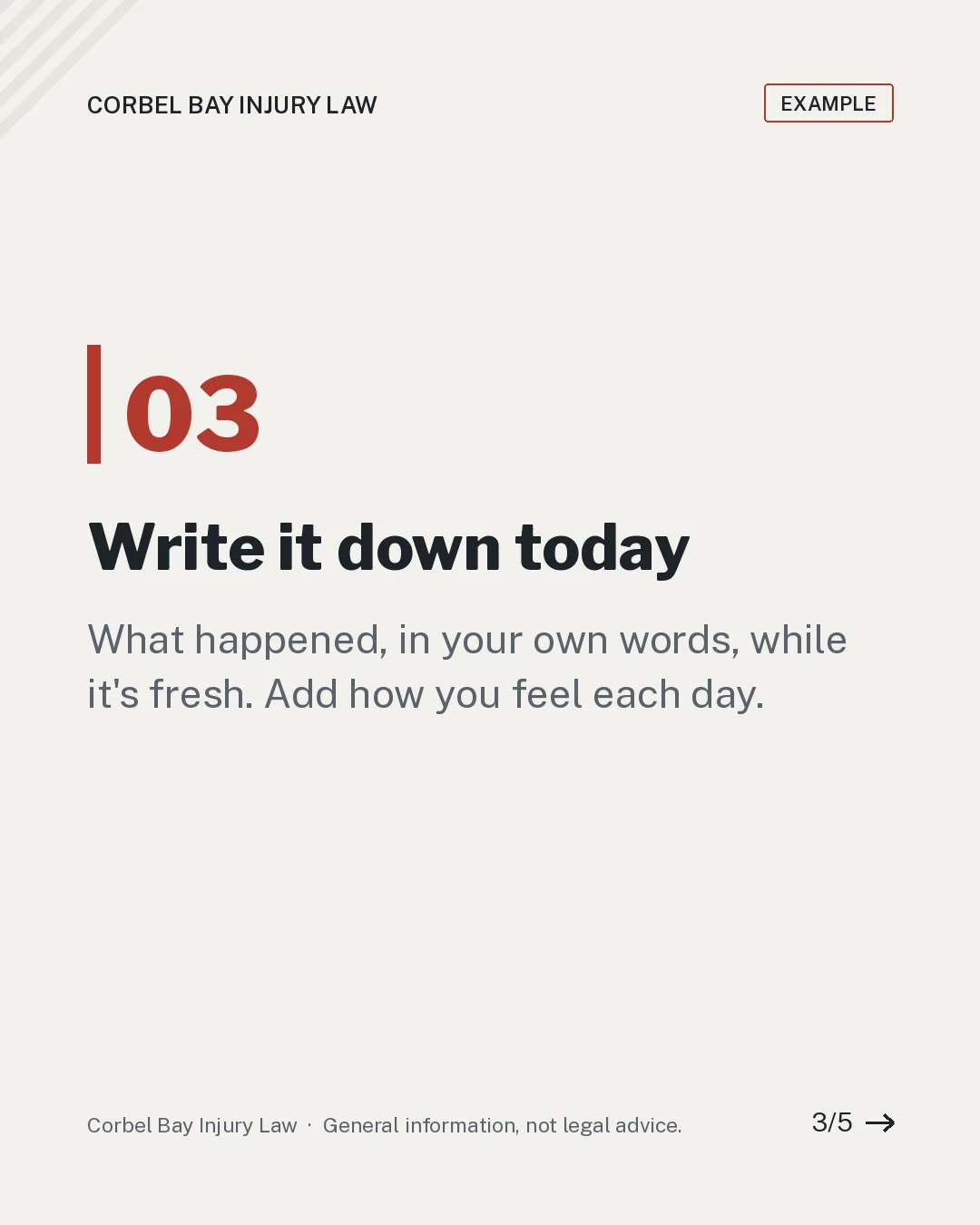
Write down what happened while it's fresh. A few paragraphs in your own words, plus short notes on how you feel each day, can help you remember details weeks later.
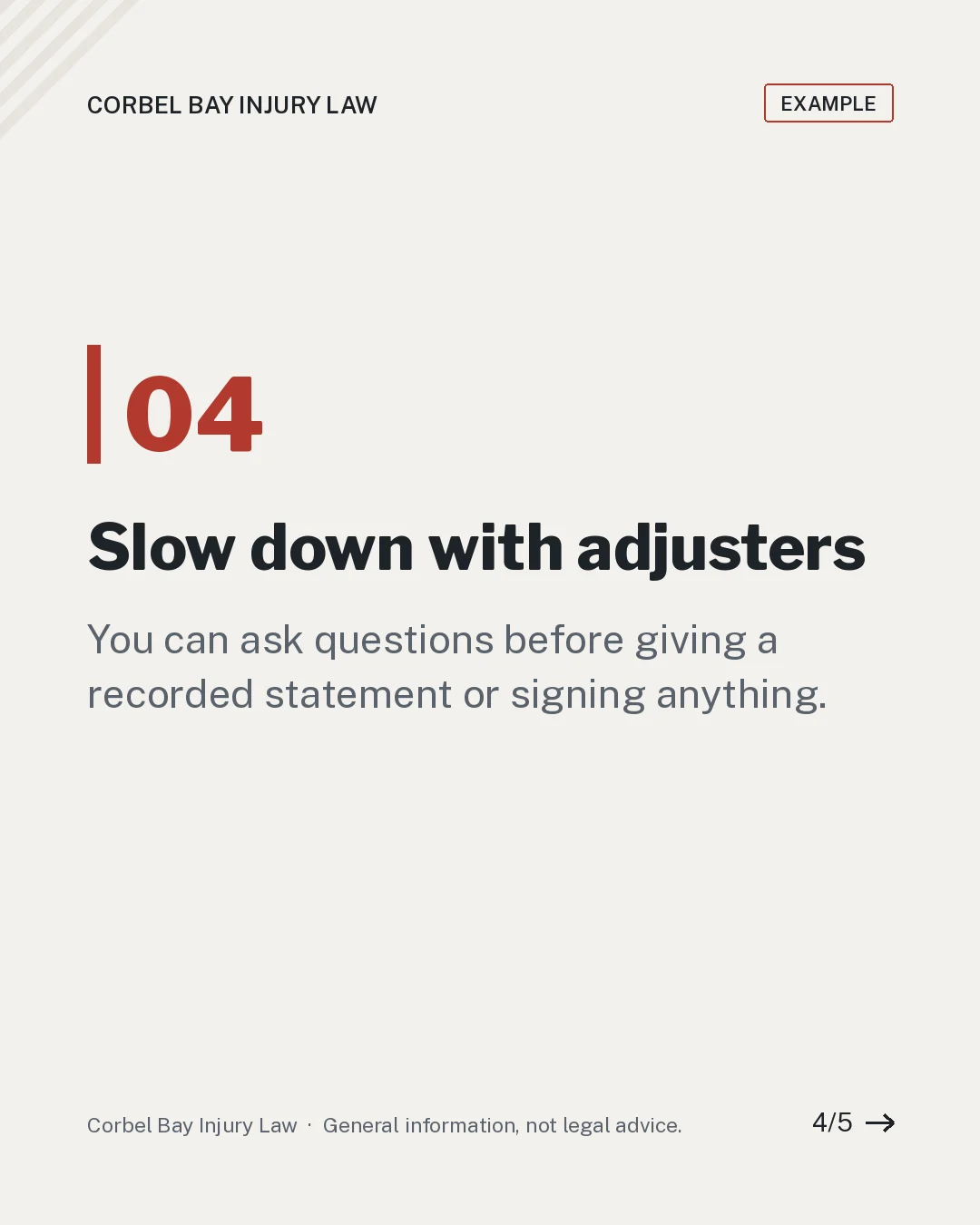
Take your time with insurance calls. An adjuster may ask for a recorded statement or for you to sign forms. It's fine to ask what a form is for, and to talk with an attorney before you give a statement or sign.
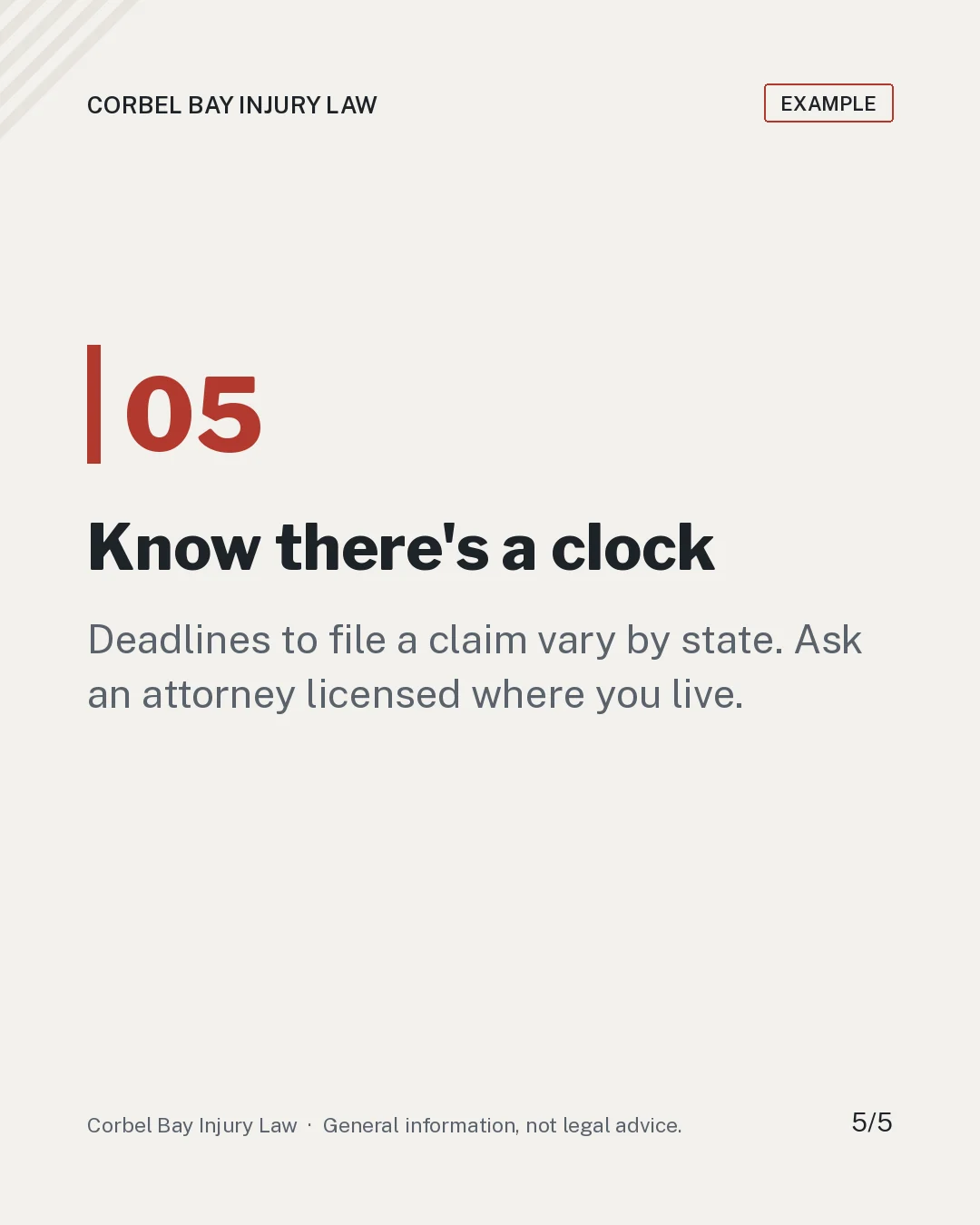
Finally, know that there is a clock. The deadline to bring a claim depends on your state and your situation, so it's worth asking about early instead of later.
Try this week: put everything from the accident into one folder, including photos, so nothing gets lost.
This newsletter is general information, not legal advice. Reading it does not create an attorney-client relationship.
02 / BLOG EXCERPT
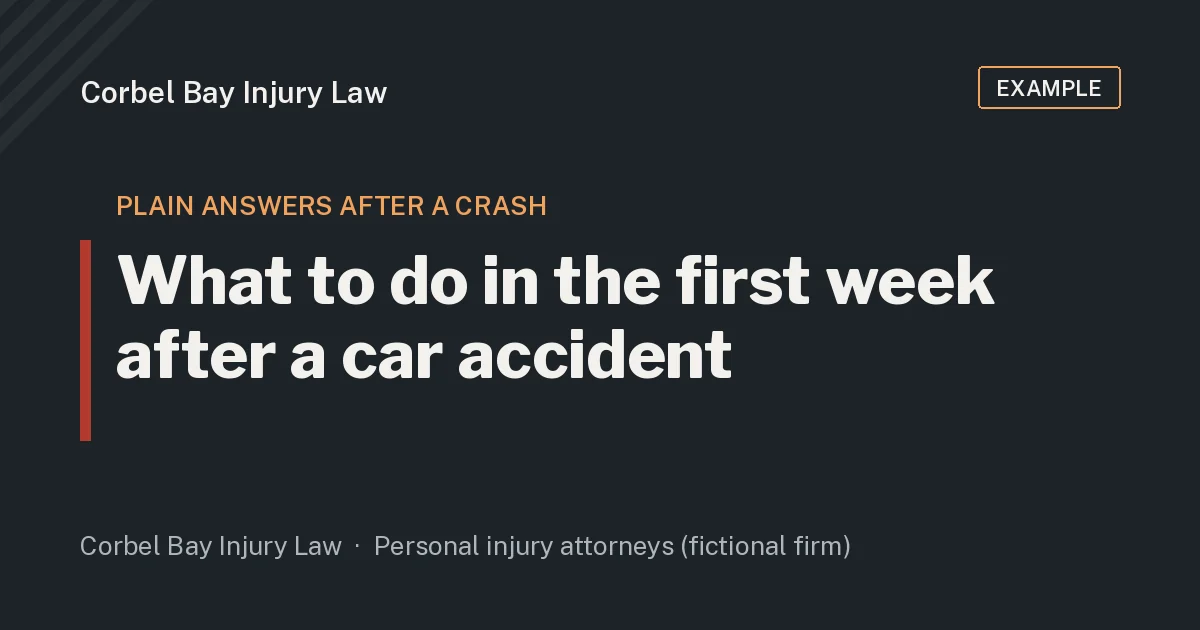
What to do in the first week after a car accident
The hours after an accident are usually about safety: checking on everyone involved, calling for help and getting home. The week that follows is when the questions start, from repair shops, doctors and insurance companies.
A few habits make that week easier. Getting a medical evaluation early gives you answers about your health and a record of your visit. Keeping one file for photos, contact details, claim numbers and receipts means you won't have to rebuild the story later. Writing a short account in your own words helps you keep the details straight.
Insurance calls deserve a little patience. You can ask questions, take notes and get advice before giving a recorded statement or signing a release. Rules and deadlines for injury claims vary by state, so the details belong in a conversation with an attorney licensed where you live.
03 / SOCIAL POSTS
Four ways to keep the conversation going.
04 / GRAPHICS (TEXT + GRAPHICS PLAN)
The same week, as branded graphics.
On the Text + Graphics plan, the same episode also becomes 3-5 graphics a week in your colors: quote cards, a carousel and a blog header.
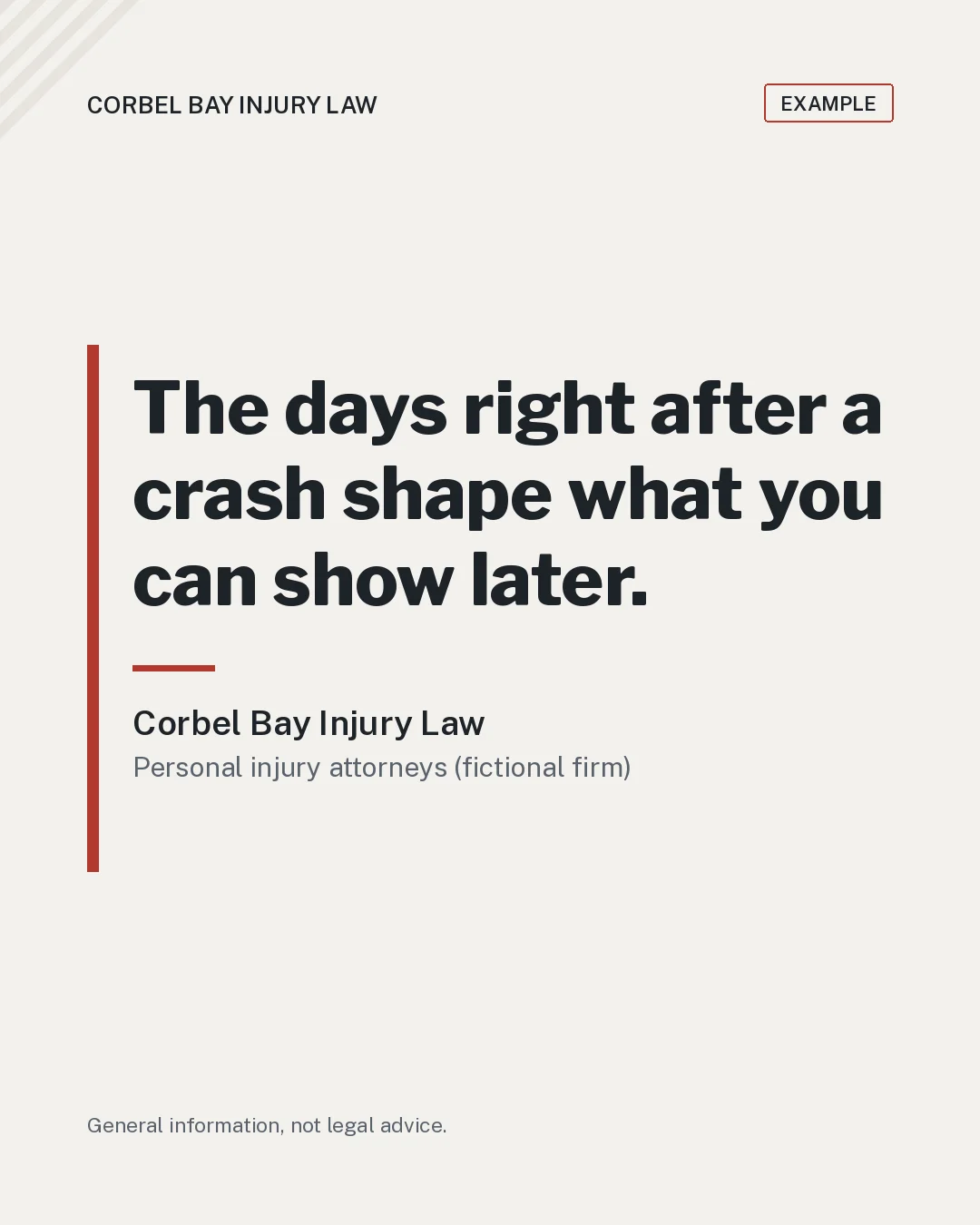
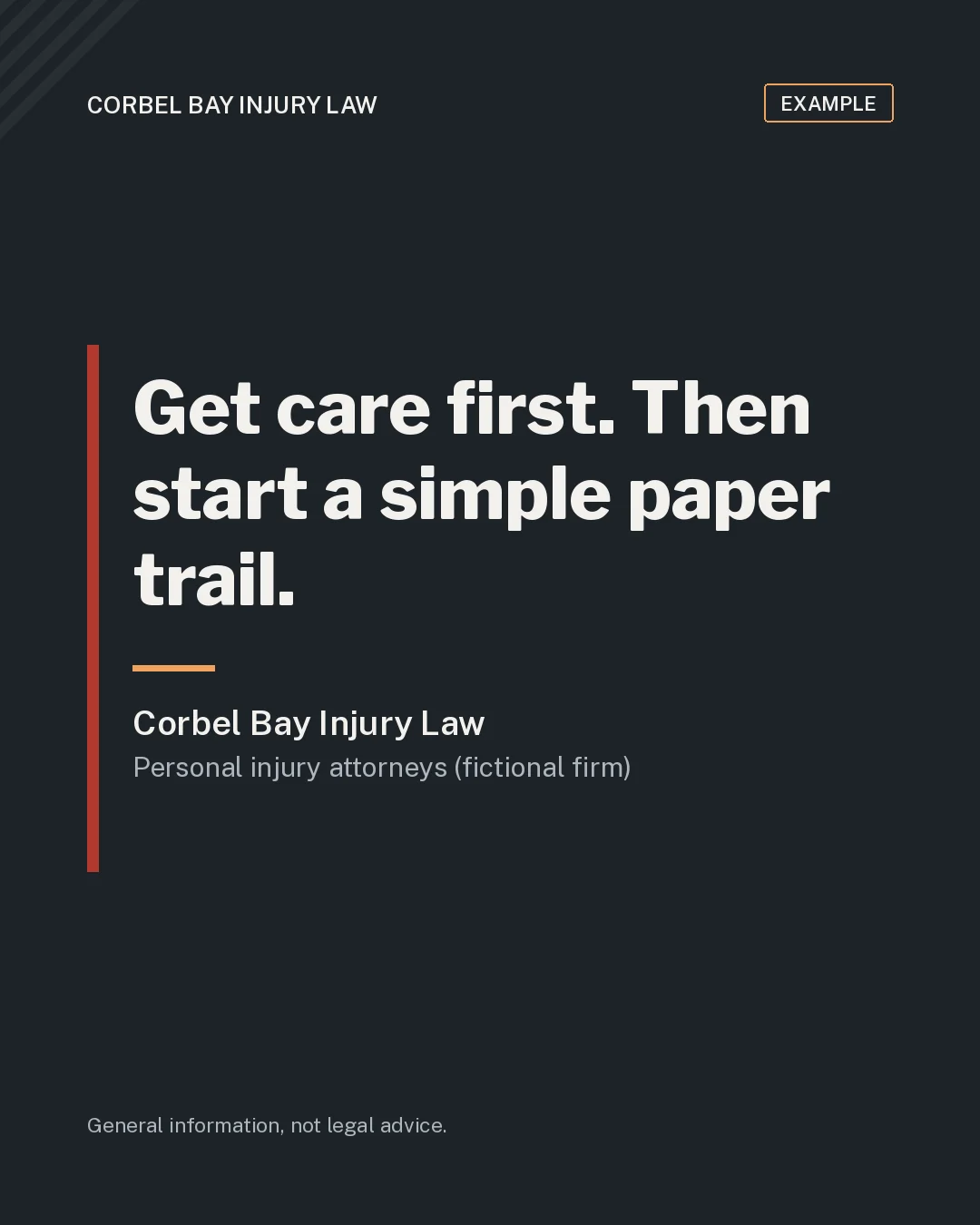
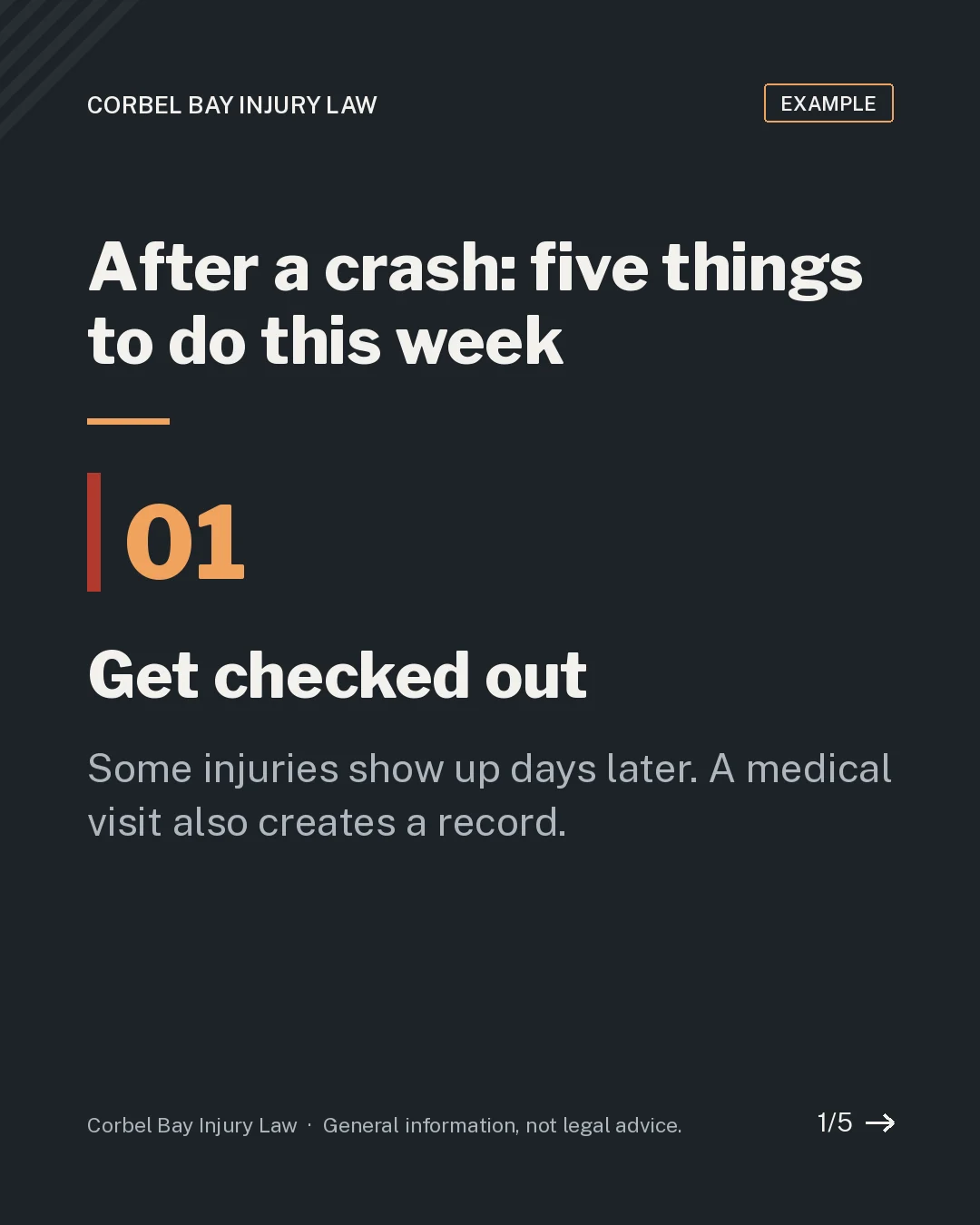
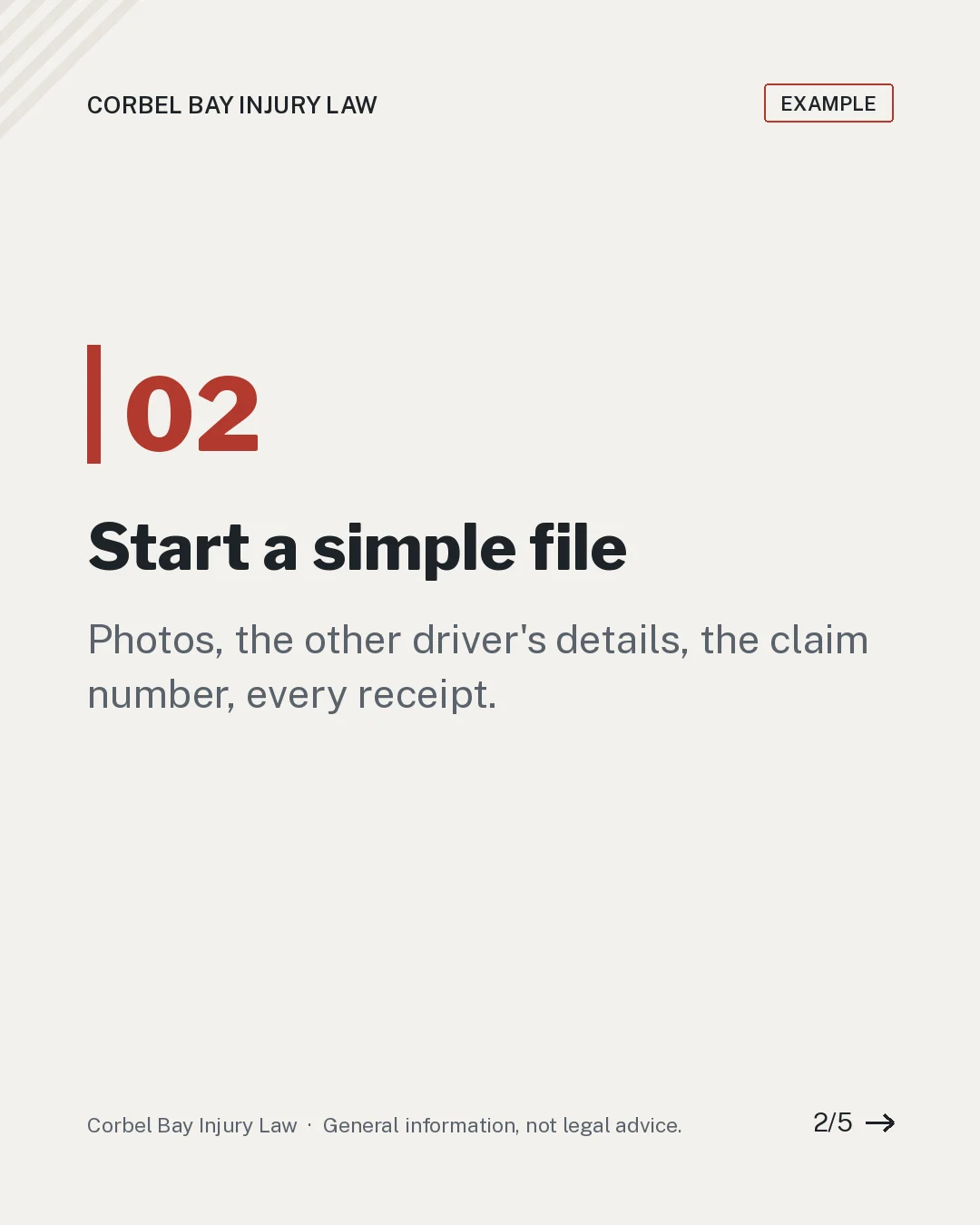
Illustrative graphics for a fictional firm, built from the sample week above.
Illustrative sample for a fictional law firm. General information only, not legal advice, and not attorney advertising for any real firm. No outcomes are promised.